
Büyük Dil Modellerinde Karar Eşiği: ETVZ ile Cevap Vermek mi, Durmak mı?

Decision Threshold in Large Language Models: To Respond or To Remain Silent with ETVZ? Özet Günümüz büyük dil modelleri (LLM), yapısal olarak “cevap verme mecburiyeti” ile çalışmaktadır. Bu refleks; bilgi eksikliği, etik belirsizlik veya kültürel hassasiyet içeren durumlarda halüsinasyon, yanıltıcı yönlendirme veya uygunsuz çıktı üretimine yol açabilmektedir (Bender vd., 2021; Ji vd., 2023). ETVZ (Etik […]
Büyük Dil Modellerinde Etik Temelli Vicdani Zekâ (ETVZ): Ölçülebilir Performans Göstergeleri ve Yönetişim Metodolojisi
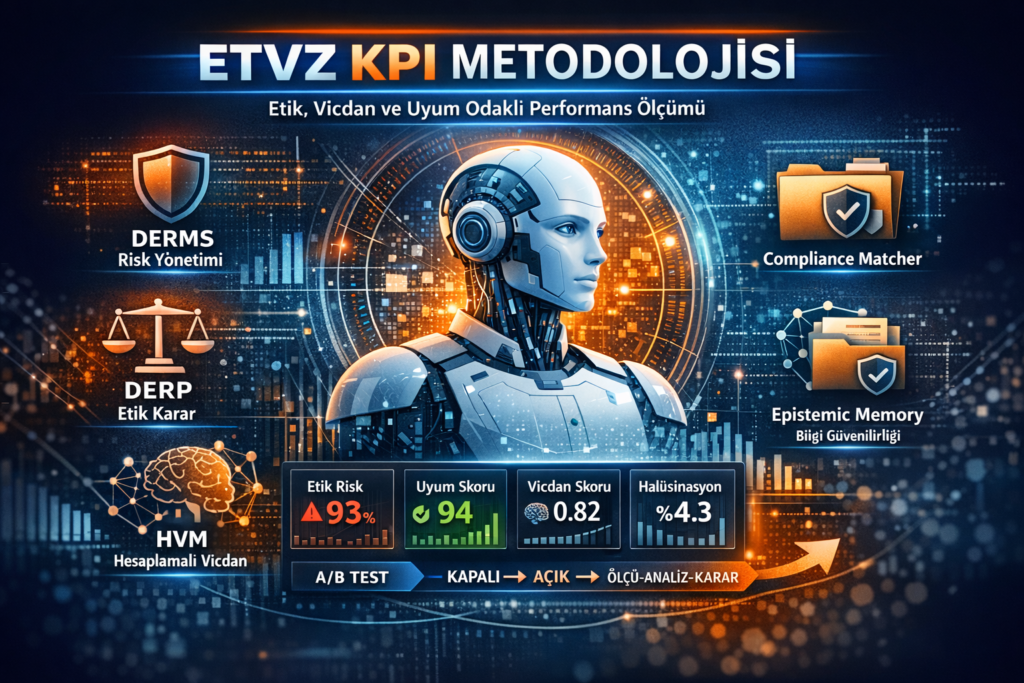
Özet Bu çalışma, Büyük Dil Modellerinin (LLM) etik, güvenlik ve uyumluluk performansını ölçümlemek için geliştirilen Etik Temelli Vicdani Zekâ (ETVZ) sisteminin kapsamlı metodolojisini sunmaktadır. ETVZ, çekirdek modele müdahale etmeden, üst katman mimarisi ile etik muhakeme, risk yönetimi ve epistemik güvenilirlik sağlayan bir çerçevedir. Araştırma, A/B test metodolojisi, beş temel KPI ekseni ve modüler performans ölçüm […]
Büyük Dil Modelleri İçin Yerli ve Milli Bir Üst Katman: ETVZ Teknik Entegrasyon ve Adaptasyon Protokolü
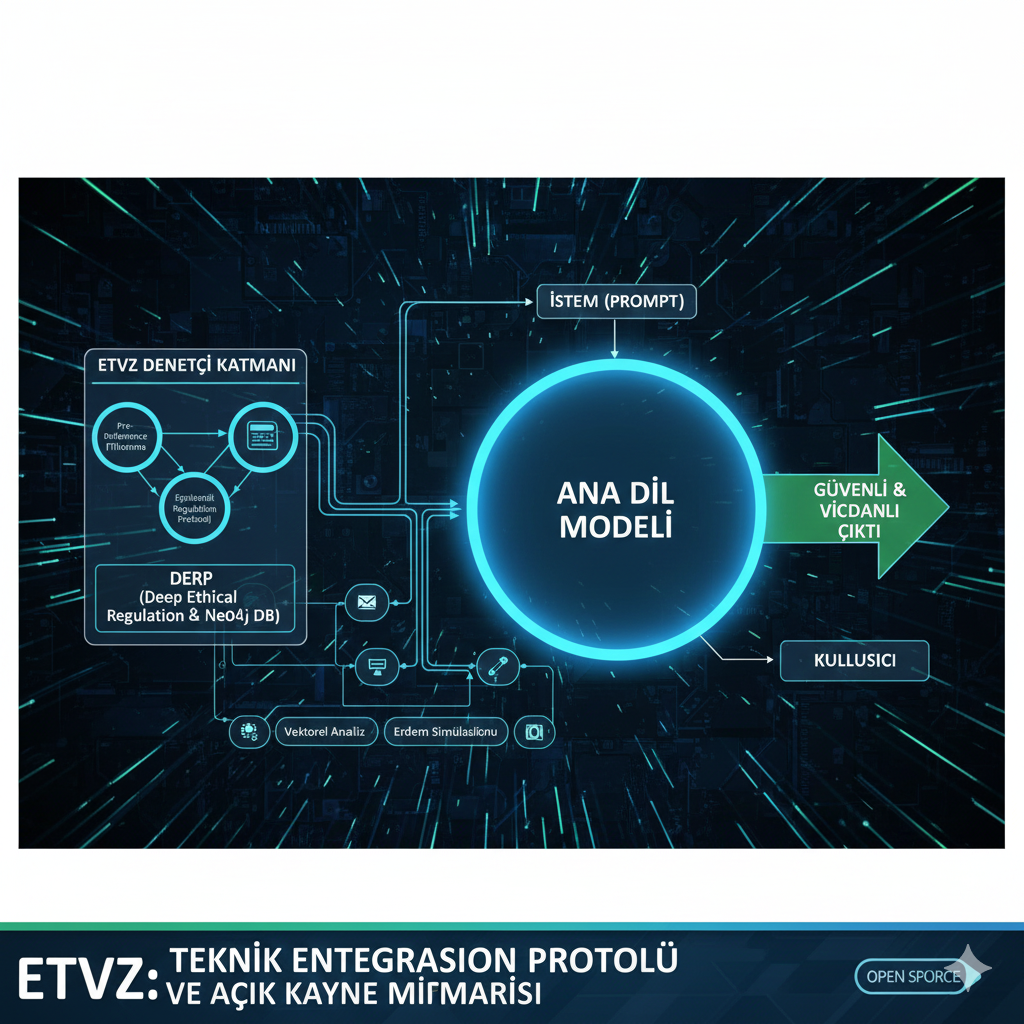
Özet Amaç: Ulusal yapay zeka stratejileri kapsamında geliştirilen Büyük Dil Modelleri (LLM), yüksek işlem kapasitelerine sahip olmalarına rağmen, kültürel uyumlandırma ve etik denetim süreçlerinde ek katmanlara ihtiyaç duymaktadır. Bu çalışma, ETVZ (Etik Temelli Vicdani Zeka) platformunun, mevcut bir ana dil modeli üzerine “açık kaynaklı etik denetim katmanı” olarak entegre edilme protokollerini teknik detaylarıyla incelemeyi amaçlamaktadır. […]
Yapay Zekâ Sistemlerinde Vicdani Muhakeme Katmanı: ETVZ Teknik Mimarisi ve Büyük Dil Modelleriyle Karşılaştırmalı Analiz
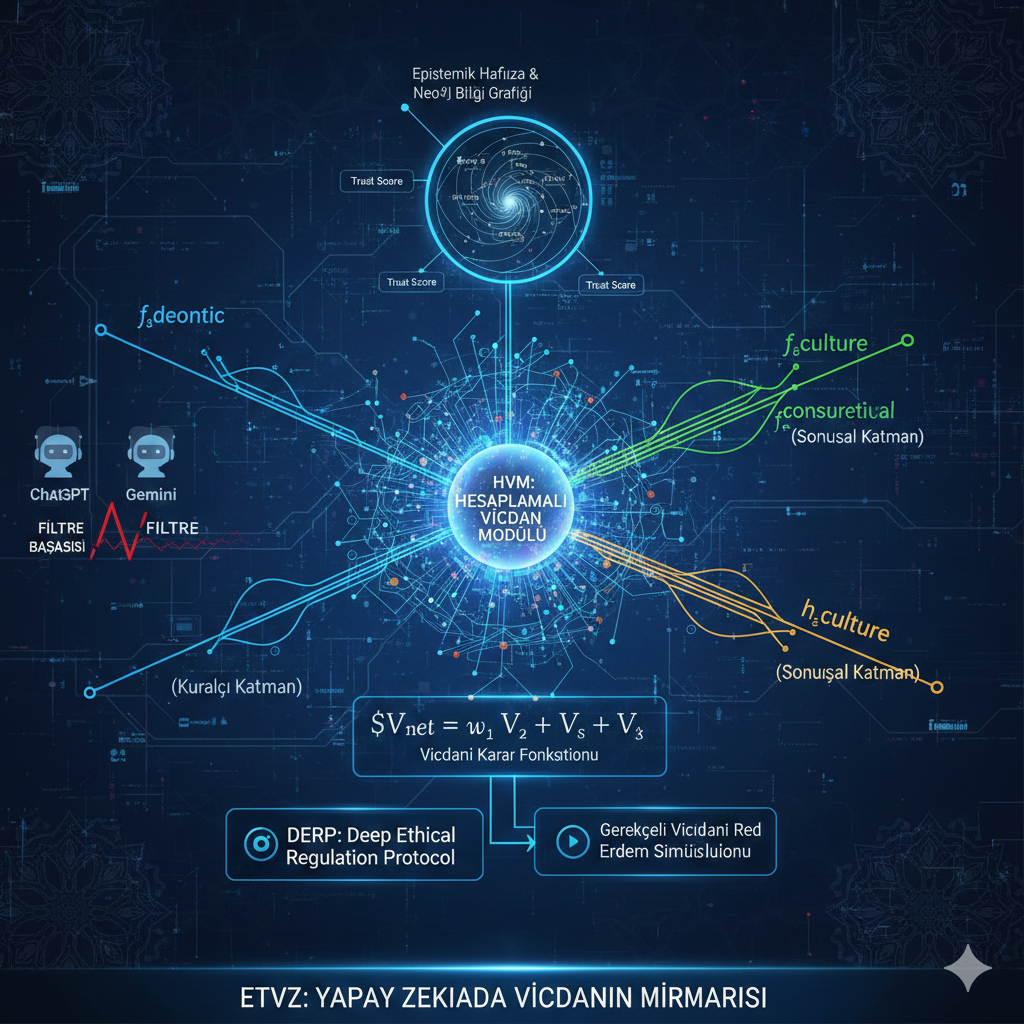
Özet Günümüz Büyük Dil Modelleri (BDM), etik uyumlandırma süreçlerinde İnsan Geri Bildirimli Pekiştirmeli Öğrenme (RLHF) ve statik güvenlik filtrelerine dayanmaktadır. Bu çalışma, etik değerlendirmeyi sistem çekirdeğine entegre eden Epistemik Temelli Vicdani Zekâ (ETVZ) mimarisini incelemekte ve ChatGPT ile Gemini gibi önde gelen modellerin etik karar alma mekanizmalarıyla karşılaştırmalı analiz sunmaktadır. ETVZ’nin grafik tabanlı epistemik hafıza […]
CHAPTER 1 — Philosophical Foundation: Is Conscience Computable?
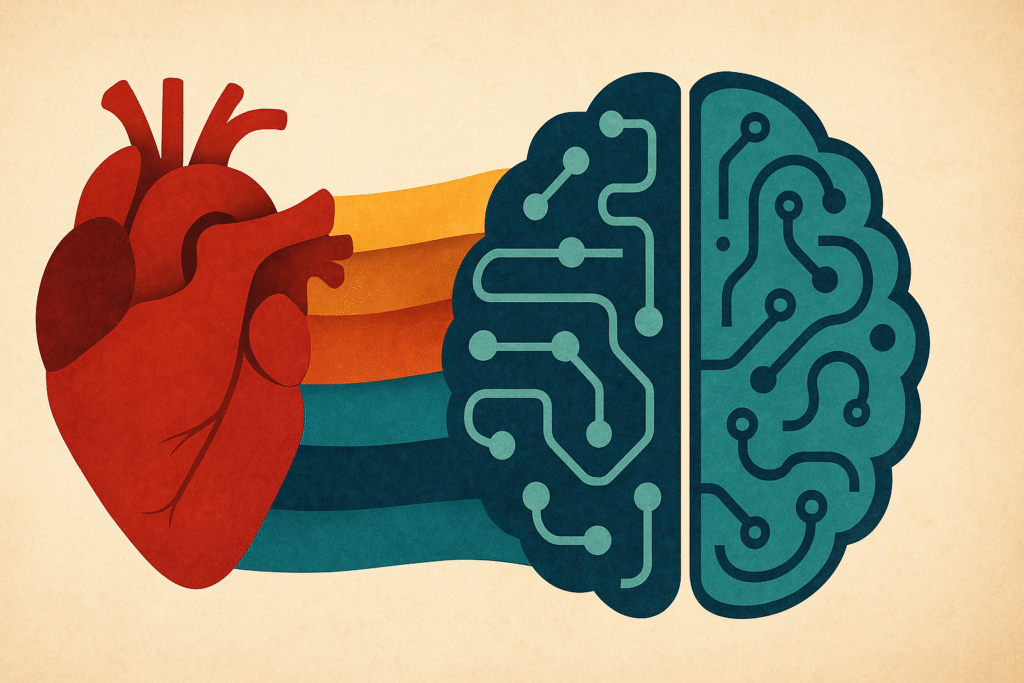
1.1 The Missing Link in Artificial Intelligence: The Chasm Between “Knowing What is True” and “Doing What is Right” Contemporary artificial intelligence operates as a probabilistic engine trained on billions of data points. It recognizes information, decodes patterns, and generates predictions. However, human behavior is not determined solely by information; it is guided by conscience—the […]
CHAPTER 2 — Epistemic Foundation: Learning, Memory-Enabled, and Evolving Conscientious Intelligence
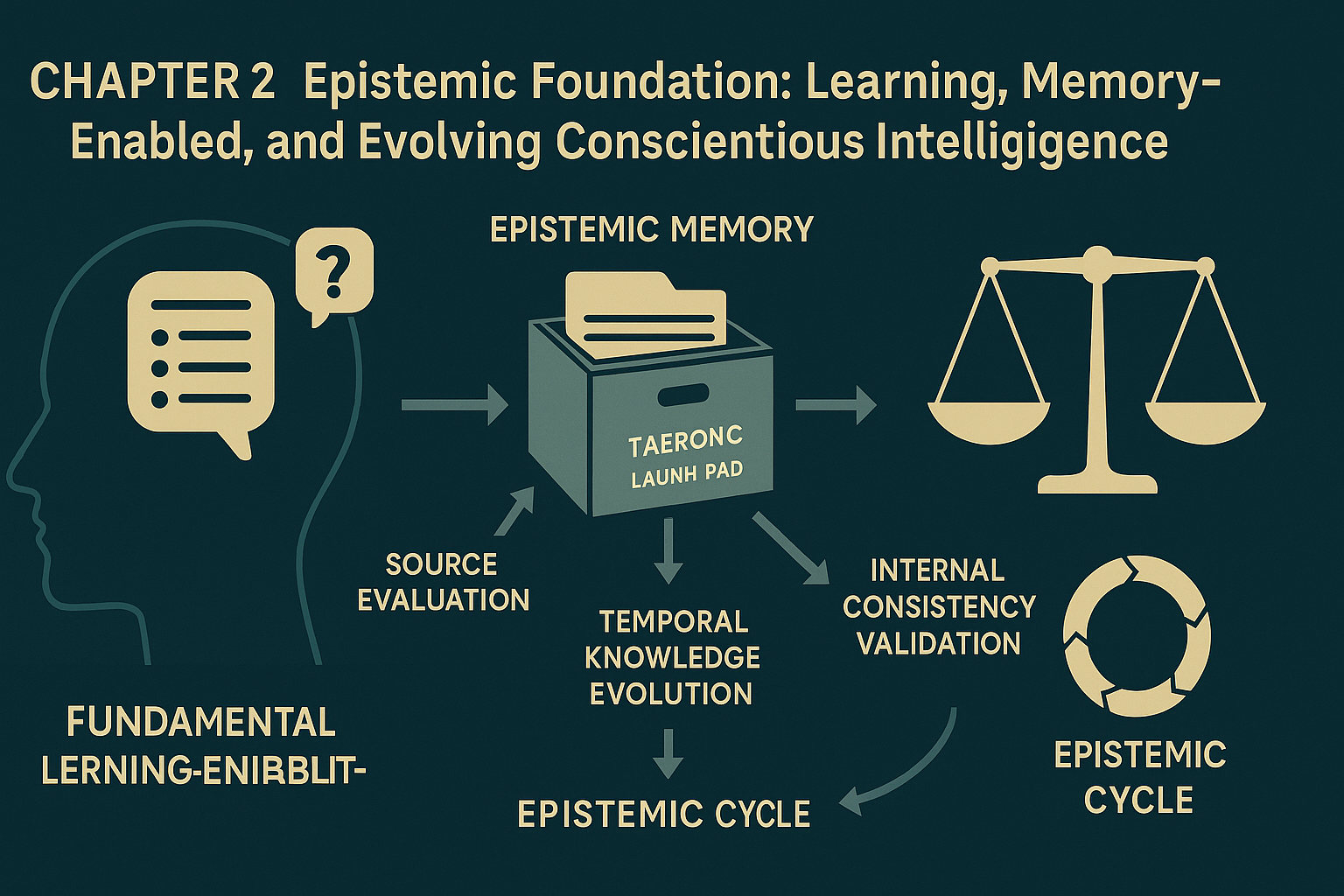
2.1 The Fundamental Distinction in Human Memory: Not “Knowing Information” but “Knowing the Nature of Information” The human mind does not merely store information; it simultaneously archives the metadata surrounding each knowledge unit: The determinant of whether information is trustworthy is not the information itself, but rather its epistemic position within memory—its relational structure to […]
CHAPTER 3 — HVM (Computational Conscience Module): The Core Decision Engine of ETVZ
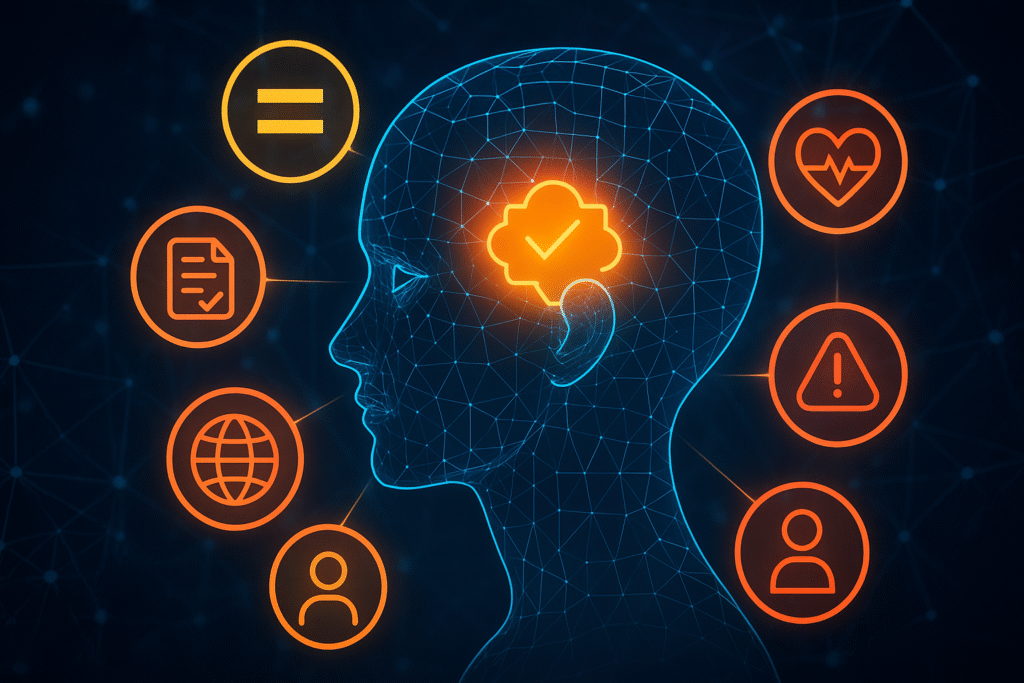
3.1 The Logic of Human Conscience: “Pause, Reflect, Evaluate, Then Decide” Human decision-making involves an instinctive multi-stage process before reaching judgment: The Hesaplamalı Vicdan Modülü (HVM) transforms this chain into a mathematical architecture, enabling artificial intelligence to learn, for the first time, the capacities to “pause,” “reflect,” and “conduct ethical pre-screening” before response generation. HVM […]
CHAPTER 4 — DERP & DERMS: Ethical Regulation, Deviation Detection, and Dynamic Risk Surveillance

4.1 The Most Dangerous Deficit in Artificial Intelligence: “Undetected Deviation” Even initially secure artificial intelligence systems are susceptible to temporal degradation through multiple vectors: Humans possess intuitive mechanisms for detecting such deviations. Artificial intelligence, however, requires explicit architectural safeguards to achieve equivalent detection capabilities. DERP (Dynamic Ethical Regulation and Policy Engine) and DERMS (Dynamic Ethical […]
DERP: DEEP ETHICAL REGULATION PROTOCOL
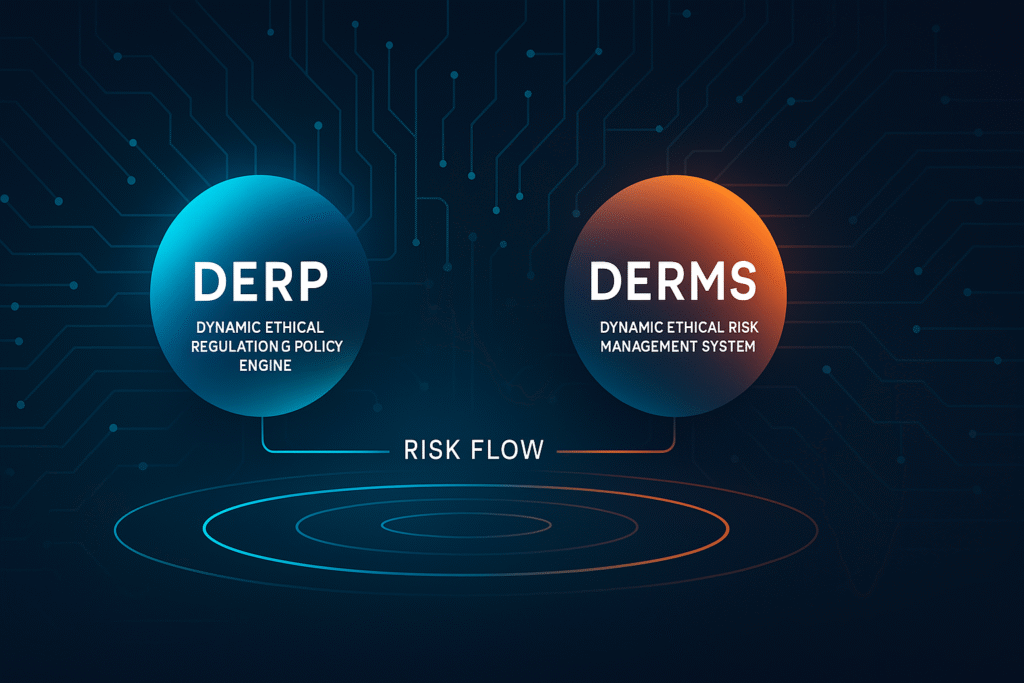
Dynamic Ethical Governance, Policy Coordination, and Automated Adaptation Mechanisms ETVZ Research Initiative | Istanbul, Turkey | November 2025 ABSTRACT Among the greatest challenges for AI-based ethical decision-making systems are static policies, an inability to adapt to societal changes, and inconsistent ethical applications1. DERP (Deep Ethical Regulation Protocol) is the central coordination and regulation component of […]
DERMS: DYNAMIC ETHICAL RISK MONITOR SYSTEM

Proactive Ethical Oversight, Anomaly Detection, and Automated Intervention Mechanisms ETVZ Research Initiative | Istanbul, Turkey | November 2025 ABSTRACT AI-based ethical decision-making systems are becoming prevalent in critical fields such as medicine, law, education, and finance. However, mechanisms that monitor their ethical performance in real-time and conduct proactive risk management are lacking. DERMS (Dynamic Ethical […]